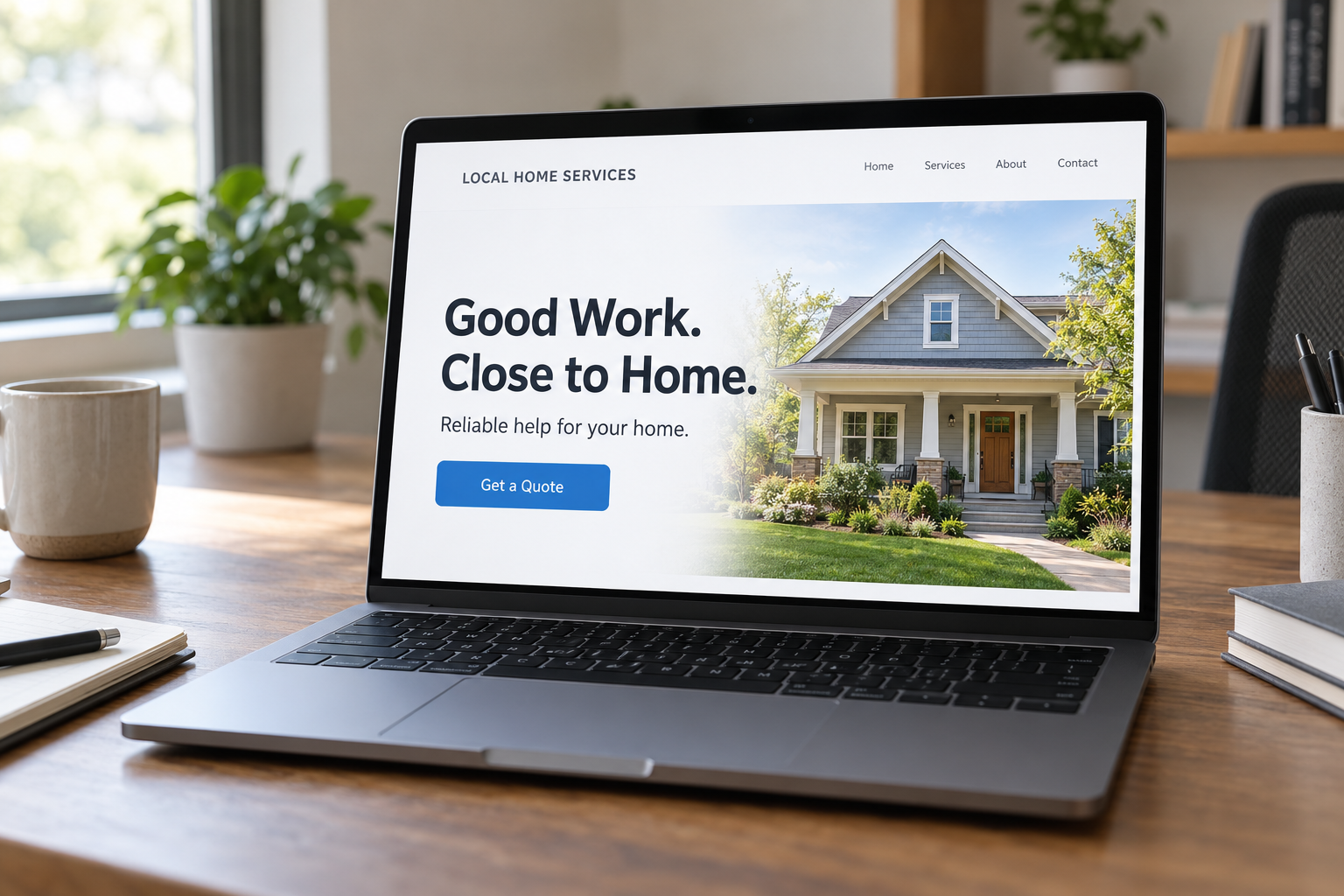
Yes! It is literally the K-Wired.com business model.
I build simple business websites because plenty of local businesses need a clear, professional way to get found and contacted. Their customers need to understand what the business does, decide whether it fits their needs, and take the next step.
I have seen many websites that look really cool but take too long to load, have too many moving parts, or bury the customer behind complicated processes and competing calls to action. They might be pretty. Sometimes, though, all you need is a static site.
That does not mean every simple website will outperform every complicated one. It means complexity needs a reason to be there. Looking expensive is not enough of a reason.
What Does “Static Website” Actually Mean?
A static website serves pages that are already built, rather than assembling a personalized experience for each visitor. For a local business, that might mean a homepage, services page, about page, and contact page.
Static does not mean frozen in time. You can update the wording, replace photos, add pages, and connect a contact form or other useful service.
It also does not mean ugly. A simple site can have excellent photography, thoughtful spacing, readable text, and a polished design. Customers do not need to know how the website was built to appreciate that it works.
The question is what they need to accomplish once they arrive.
Give Visitors a Clear Path to Contact You

Imagine someone looking for a local repair service on their phone. They want to know whether you handle their problem, serve their area, and offer a way to get in touch.
That is a fairly straightforward job for a website.
It becomes harder when the page makes them sit through an elaborate introduction, figure out unfamiliar navigation, or choose between several equally loud instructions. Call us. Join this. Download that. Start an assessment. Create an account.
At some point, the customer just wanted someone to fix the thing.
My approach to small-business website design at K-Wired.com keeps that purpose front and center. The website should help the business earn an opportunity to talk to a customer.
The Rules I Use to Keep Websites Effective
My process has developed over years of website experience and direct observations of successful sites online. These are a few of the rules behind it.
One Consistent Call to Action
A call to action is the instruction that tells someone what to do next, such as calling the business or requesting a quote.
I focus on one consistent CTA across the site. You can repeat that action in useful places without turning every section into a different assignment.
If calling is the goal, make calling obvious. Visitors should understand the next step without having to decode your marketing strategy.
A Hero Section That Explains the Business
The hero is the opening section near the top of the page. I want an obvious title and description explaining what the business does.
A clever slogan can add personality, but it should not leave people guessing whether you repair roofs, sell roofing supplies, or teach roofing classes.
Give visitors enough information to recognize that they are in the right place.
Focused Wording
I design wording around specific search phrases relevant to the business and the page.
That means giving the content a clear subject and writing naturally about it. It does not mean repeating the same phrase until the page sounds like a malfunctioning answering machine.
The visitor still needs useful information. Search visibility brings an opportunity; the wording needs to help someone understand the offer.
Fast Load Times
I am stubborn about speed. Every extra visual effect or tool has to earn its place.
If a feature makes the website slower or harder to use, I want a clear explanation of how it helps the customer. “It looks cool” is a pretty weak argument when someone is waiting to see your services.
When a Simple Site Is Not Enough

There are situations where my standard static website process stops being the right fit.
A shopping cart, a complex custom process, or an involved online tool can require a different kind of build. Customers might need to manage accounts, complete transactions, or move through a workflow that a basic information site cannot handle on its own.
A static site can connect to outside services, but the full solution now includes more than simple pages.
That additional complexity can be worthwhile when it serves an actual business need. I would not tell a client to abandon a necessary tool just to keep the website simple.
I would ask whether the tool belongs in the project because customers need it or because somebody saw an impressive demo.
How I Know Whether the Approach Is Working
I use statistics and long-term results to monitor effectiveness.
Behind my simple websites is a more involved analysis process. I use online tools to monitor website growth, visibility, and overall business performance while also watching indicators such as social media activity and Google Search Console insights.
Those signals need context. More visibility is useful, but it is not the same thing as more paying customers. I look at the broader pattern over time to judge whether things are working.
I am confident in my process because of experience and observation, and I continue monitoring it. A good-looking launch is only the beginning.
If visitors are arriving but inquiries are not following, that deserves a closer look at why a website may not be converting visitors into paying customers.
“Won’t a Simple Website Make My Business Look Cheap?”
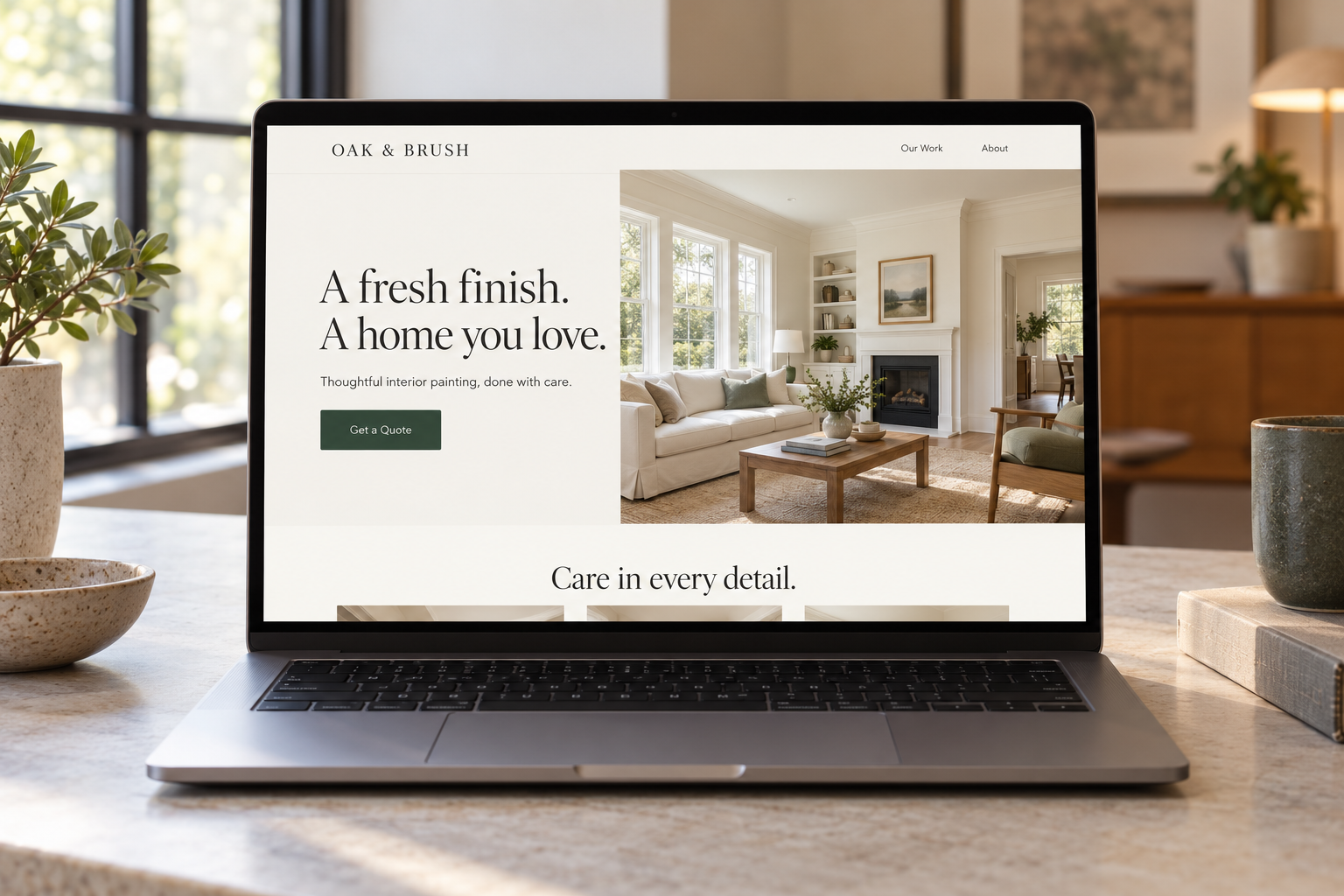
My blunt answer? At least people will be able to look at it.
A beautiful website loses much of its value when visitors struggle to load it or use it. Being accessible to a potential customer gives your business a chance to make its case.
Simple can still look professional. Show your work clearly. Explain your services. Give people reasons to trust you. Make contacting you easy.
Your business has to deliver on the opportunity the website creates. The website’s job is to help that opportunity happen.
Sell them with your business, but get eyes on it first.